7 October 2026
What is a spontaneous settlement? A field definition for camp planners
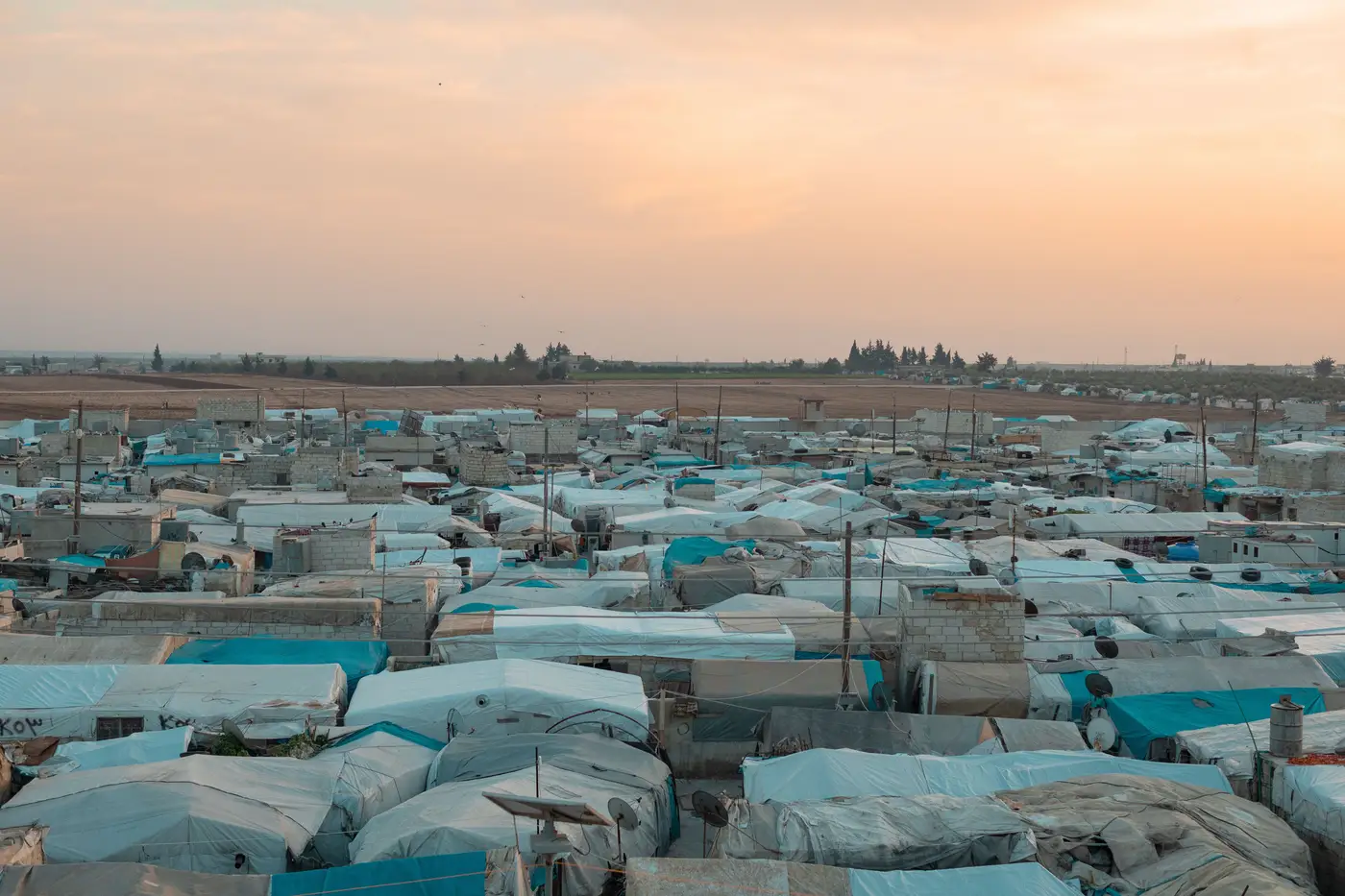
A spontaneous settlement is a site displaced people choose and build themselves, without a camp management agency laying it out first. No planned plot grid, no pre-cleared drainage, no numbered blocks. People pick a patch of land near a road, a river, a market, or a border crossing and start putting up shelter, often within days of arriving.
The term shows up constantly in situation reports and cluster meetings, but it gets used loosely. Worth being precise about it, because the planning response to a spontaneous settlement is genuinely different from the response to a planned camp, and mixing the two up in your sizing numbers throws off everything downstream, from water trucking schedules to NFI distribution lists.
Spontaneous settlement vs. planned camp
A planned camp exists because someone decided it should: a government, a UN agency, an NGO consortium. Plots get surveyed before people arrive. Access roads, latrine blocks, and distribution points get sited with some foresight. Growth is managed, in principle, by opening new sectors as registration numbers climb.
A spontaneous settlement runs the opposite direction. People arrive first, shelter follows immediately, and the layout reflects whatever made sense to the first fifty families who showed up: a flat field, proximity to a well, shade from a tree line. There's no registration desk at the entrance. Density can double in a week if word gets around that there's water and relative safety.
The practical difference for a planning officer: a planned camp gives you a population estimate straight out of the registration log, because you've got a gate and a list. A spontaneous settlement gives you neither. You're estimating the population from the footprint and the shelter count, because that's often the only data source that updates faster than the crisis does.
Self-settled displacement and why it's hard to size
Self-settled displacement is the broader pattern spontaneous settlements sit inside. Displaced households make their own decision about where to stop, rather than being directed to a transit site or a managed camp. That decision gets made under time pressure, usually without a headcount anywhere in the loop.
Registration, when it happens at all, lags arrival by days or weeks, and plenty of self-settled sites never get a formal registration pass, particularly the smaller ones that spring up along a displacement corridor rather than at a single named destination. A site visit gives you a snapshot, but a snapshot from three weeks ago tells you almost nothing about what the site looks like now if new arrivals have kept coming.
The settlements that cause the most sizing headaches are usually the informal ones nobody flagged as a "site" in the first place: a cluster of tents behind a petrol station, an informal extension tacked onto the edge of an already-registered camp, three or four households that became thirty over a month. None of that shows up in a camp list. It shows up in whatever you're using to watch the ground.
Why this distinction matters for response sizing
If you're sizing a response, the question isn't really "what is a spontaneous settlement" in the abstract. It's "how many of these have opened up in my area of operation, and how fast are they growing." A planned camp with a working registration system can mostly answer its own size question. A spontaneous settlement can't, not through its own administrative process, because there isn't one.
That's the gap a weekly structure count closes. Instead of waiting for the next registration round or scheduling another field visit to a site that may have doubled since the last one, you get a shelter count and a change layer, built from imagery rather than from whoever happened to drive past. New shelters since last week, a footprint that's expanded or contracted, delivered as a map layer or CSV on a cadence that actually keeps pace with how fast these sites move.
Displacement Monitoring turns that weekly imagery into the structure counts and change layers you need to size a response without betting the plan on last month's numbers.