14 October 2026
What is a site profiling exercise in camp coordination?
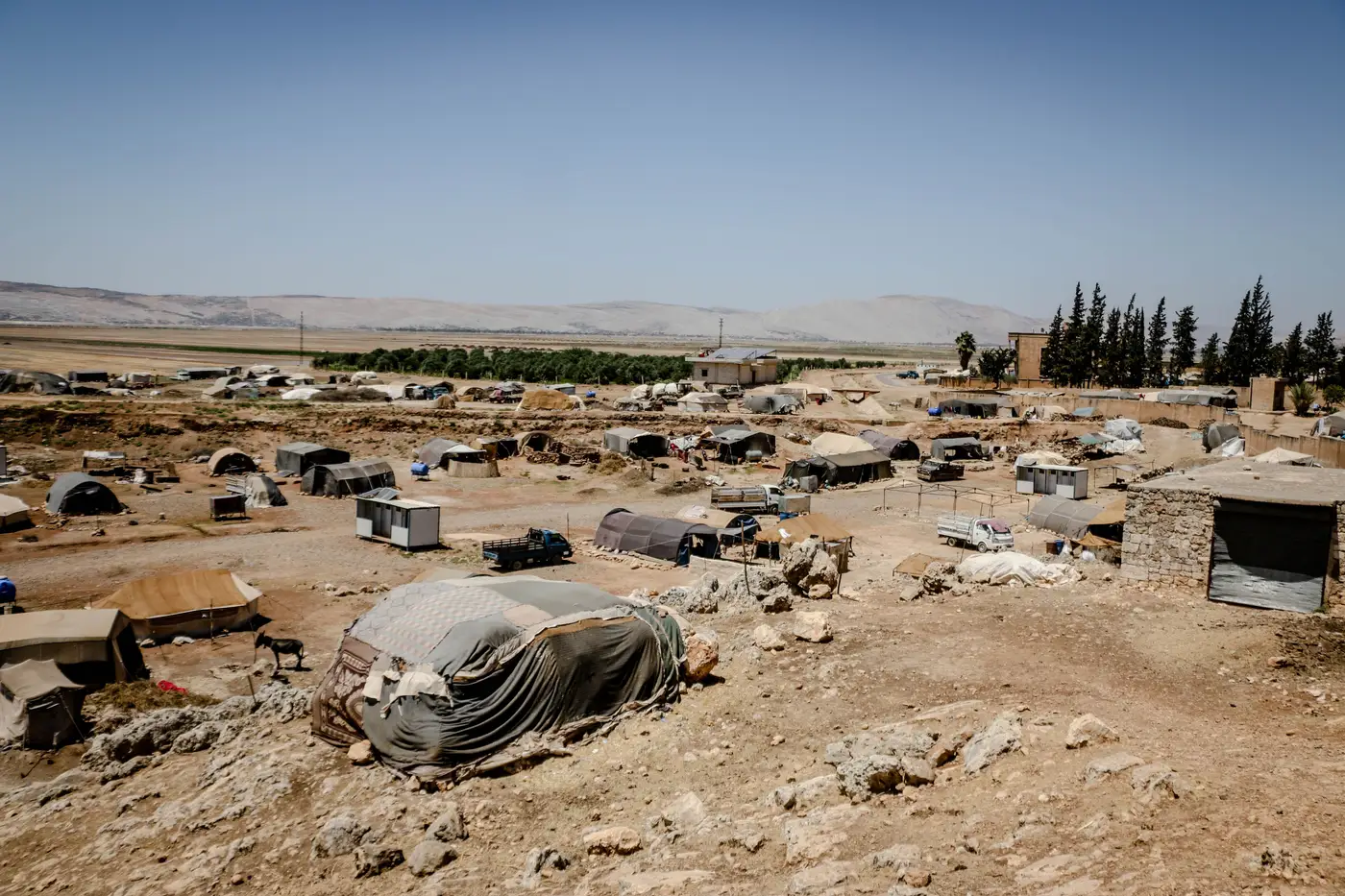
If you've sat in a CCCM coordination meeting, you've heard "site profile" and "registration data" used like they're interchangeable. They're not, and mixing them up is how a response ends up planned around numbers that are already three weeks stale.
A site profiling exercise is a structured survey of a displacement site itself: its boundaries, the services present, the hazards nearby, the shelter types in use, access routes, water points, and a rough population estimate tied to all of that. It's the document a camp management agency produces (often using the IOM DTM site profile format, or something adapted from it) to answer the question "what is this place and what does it need," not "who exactly lives here." Profiling is site-level. It describes the container.
What a site profile captures
A reasonably complete profile will walk through:
- Site boundaries and total footprint, usually sketched or GPS-walked
- Shelter typology: tents, makeshift structures, transitional shelters, host-family arrangements
- Services on site: health posts, latrines, water points, distribution areas
- Access and hazard notes: flood risk, road conditions, proximity to the original displacement trigger
- A population estimate, derived from headcounts, shelter counts, or a combination of both
That last line is where profiling and registration start to overlap, and where teams get confused.
Camp profiling vs registration: two different jobs
Registration is individual-level. It's biometric or biographic data collected household by household, usually to determine eligibility for assistance, run a protection screening, or set up a distribution list. It's precise at the level of the person, and it's slow and resource-heavy by design, because it has to be.
Profiling is settlement-level and repeatable. It's meant to be redone as a site changes shape, not just once at intake. A camp planning officer deciding whether to open a second water point is really asking one thing: did the site grow. That's a profiling-level question, and it's the one a planner needs answered first.
The practical difference shows up in cadence. Registration happens once, or periodically at a cost nobody wants to pay more than necessary. Profiling is supposed to happen on a rolling basis as sites evolve, but in practice it often gets redone only when someone notices the site looks different on a visit or when a new partner needs a baseline. Sites change on a weekly basis; profiles get refreshed whenever a field team can spare the time to drive out there. That mismatch in rhythm, not any flaw in the profiling method itself, is where the operational problem actually sits.
Where the lag hurts
Spontaneous settlements don't wait for a profiling mission to be scheduled. A displacement trigger hits, people move, and within days there's a new shelter cluster that no profile accounts for yet. By the time a field team gets out to walk the boundary and update the shelter count, the response is already being sized off the last profile plus whatever anecdotal reports made it into the sitrep.
Narrowing the task to just one number helps here: how many shelters are on the ground, and is that count going up. A full profile still needs the field visit for access routes, hazard notes, and service inventory. The shelter count and footprint growth, the part that usually sets off the "do we need to scale up" conversation, can be tracked on its own between visits.
That's the specific gap Displacement Monitoring is built around: a weekly structure count and change layer from satellite or aerial imagery, flagging new shelters and footprint growth between one week and the next. It doesn't replace a site profile. It fills the space between profiling missions with the one number that tends to drive the next planning decision, before the next ground visit happens.
A quick way to keep the two straight
If someone on your team asks whether the camp profile or the registration list is more current, the answer is usually neither, because they answer different questions. The profile tells you what the site is and roughly how big. The registration tells you who's in it and what they're entitled to. Neither one is built to tell you, on a Tuesday, that forty new shelters went up over the weekend.
If that weekly gap is the one your team keeps running into, take a look at what a structure count between profiling visits gets you.